Psychologist Explains What Mbappé Must Do to Win the Ballon d’Or
Kylian Mbappé needs the confidence to believe he can win the Ballon d’Or, but one psychologist believes there is an important limit he must avoid crossing: thinking he cannot fail.
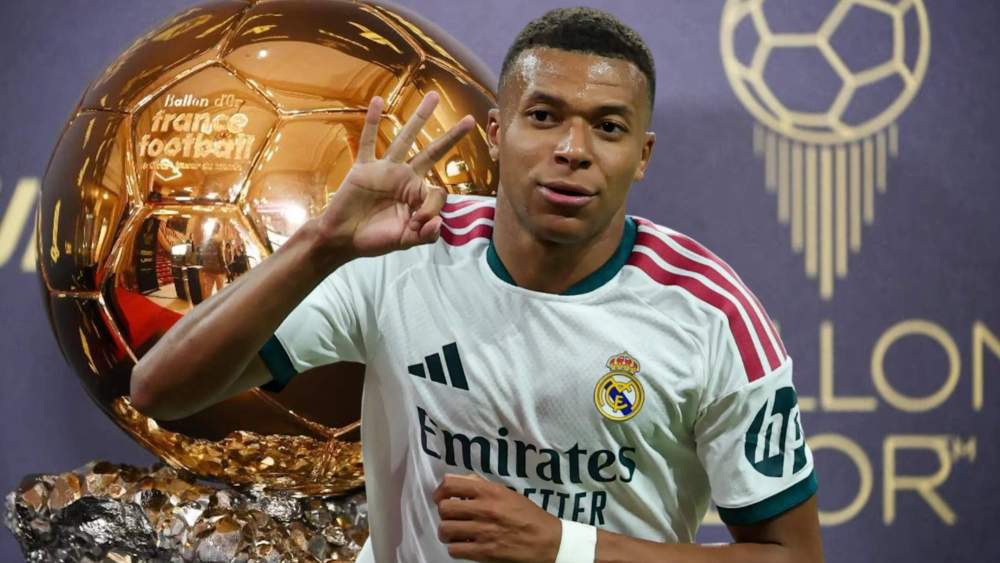
Kylian Mbappé has made no secret of his ambition to win the Ballon d’Or, and with the 2026 ceremony approaching, his confidence has once again become a talking point.
The Real Madrid forward is among the leading candidates for this year’s award, alongside players such as Harry Kane, Lamine Yamal and Khvicha Kvaratskhelia. Mbappé himself recently admitted that he would be disappointed if he failed to win, while insisting that the prize is not an obsession for him.
But where is the line between the confidence required to reach the top and believing that you are incapable of making mistakes?
According to Dani Partida, a psychologist who works with Rayo Vallecano’s youth teams, Mbappé needs an exceptionally strong belief in his own abilities — but that confidence must be balanced with an acceptance of his own vulnerability.
Confidence is essential for Mbappé
Partida believes an elite footballer such as Mbappé needs enormous self-belief, particularly when facing moments of maximum pressure.
That confidence can provide the resilience required to take responsibility when the stakes are highest. For a player competing for the biggest individual prize in football, believing that he can decide matches is therefore an important psychological asset.
However, Partida argues that confidence should not become a belief in personal infallibility.
“There’s no need to change a person’s personality,” Partida explained. “Being outgoing or even being confident isn’t necessarily a bad thing, but they have to understand where the limit is and in which situations it can cause problems.”
The danger of believing you cannot fail
The psychologist’s argument is that excessive certainty can eventually work against an elite athlete.
If a player believes he cannot make mistakes, he may become less willing to accept criticism or examine his own performances honestly. That can make setbacks harder to handle and reduce tolerance for frustration when things do not immediately go according to plan.
For Mbappé, the ideal balance would therefore be to maintain the belief that he is capable of winning the Ballon d’Or while accepting that even the world’s best players will miss chances, lose matches and have difficult periods.
In that sense, confidence and self-criticism do not have to be opposites.
Turning mistakes into opportunities
Partida believes that learning to process mistakes correctly can be particularly important for Mbappé.
Rather than viewing an error as an absolute failure, the player can treat it as part of the game and use it to identify areas for improvement.
That approach can also help protect relationships within the dressing room and coaching staff, preventing frustration from turning into blame when results do not arrive immediately.
The objective, according to the psychologist, is not to remove Mbappé’s strong competitive personality. Instead, it is about learning to channel that mentality effectively.
Mbappé needs to believe he can be the player who decides a major match — without losing touch with reality when something goes wrong.
The Ballon d’Or decision is approaching
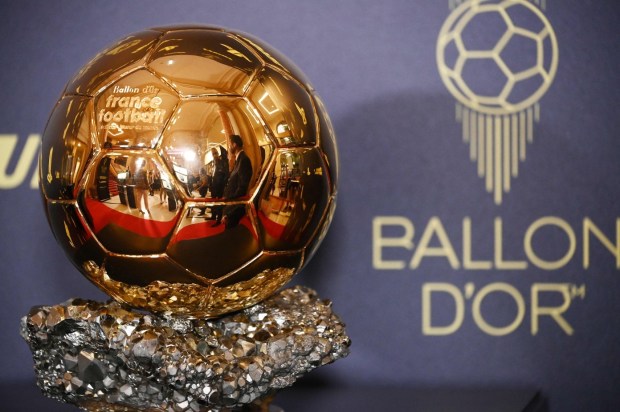
The 2026 Ballon d’Or ceremony will take place at London’s London Palladium on October 26, with the award assessing performances during the 2025/26 season through the end of the World Cup. The voting has already closed following the announcement of the 30-player shortlist.
For Mbappé, the next month will therefore be about waiting for the final verdict.
His public confidence has already made his ambitions clear. According to Partida’s psychological assessment, however, the key may be ensuring that this belief remains a source of motivation rather than turning into the assumption that he cannot fail.
For a player chasing the biggest individual prize in football, believing in yourself may be essential — but accepting your own imperfections could be just as important.