Can Arda Güler Really Become Real Madrid’s Next Great No. 8?
Arda Güler has already shown that he can influence games from an advanced midfield role. But could the Turkish star eventually take another step back and become a genuine No. 8 for Real Madrid?
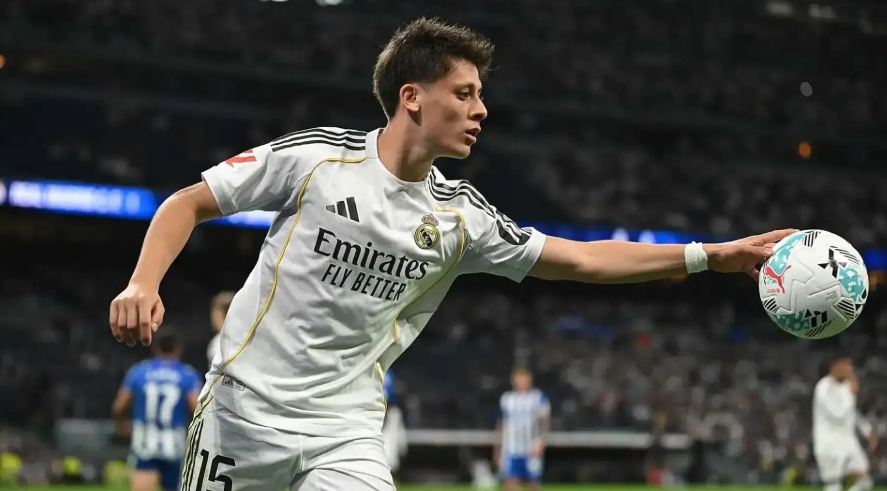
Arda Güler’s development at Real Madrid has taken an interesting turn.
The Turkish midfielder has gradually moved beyond being viewed simply as a talented attacking player capable of producing spectacular goals and passes. His ability to dictate play, create chances and contribute to the build-up has made him an increasingly important part of Madrid’s midfield structure.
But there is another question surrounding his long-term future: could Güler become a successful No. 8?
José Mourinho appears to believe that possibility is very real.
The Real Madrid manager recently spoke enthusiastically about Güler’s potential and suggested that the 21-year-old could eventually follow a path similar to Luka Modrić.
“I think the same thing will happen with him as with Luka Modrić; in the end, he will finish up playing as an ‘8’ and later as a ‘6’,” Mourinho said.
That is a fascinating prediction considering Güler’s career so far.
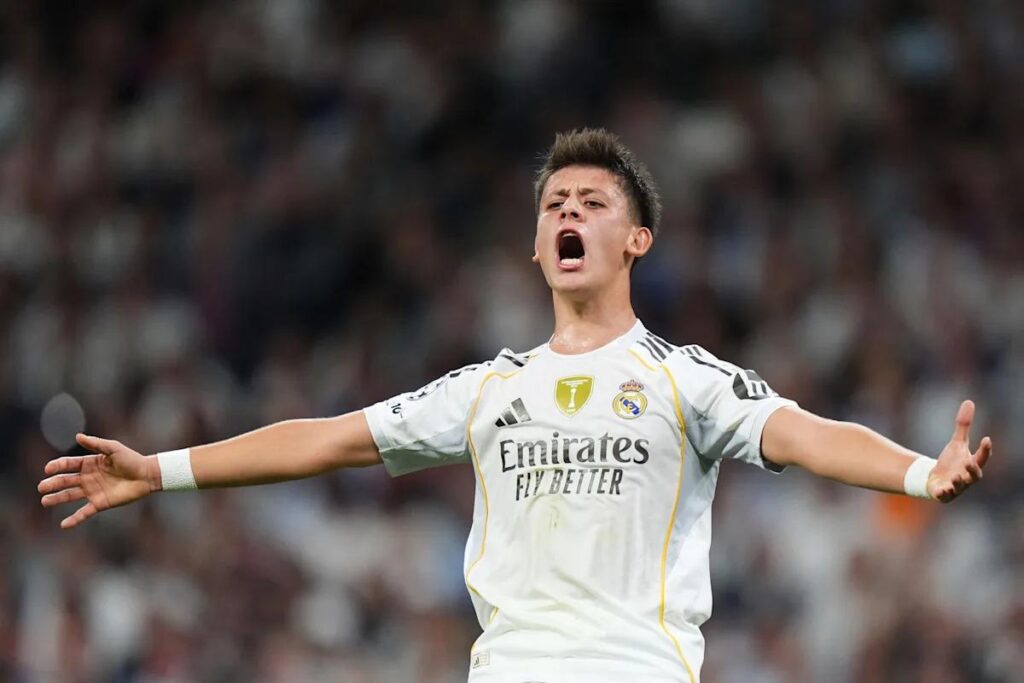
Why Güler has the qualities to play deeper
Güler’s greatest strength has always been his ability to see passes that other players do not.
His left foot allows him to deliver accurate passes between the lines, switch play quickly and create opportunities in the final third. Those qualities do not disappear when a midfielder moves deeper — in some ways, they become even more valuable.
During the 2025/26 season, Güler increasingly showed that he could influence matches from deeper areas rather than simply waiting around the penalty box.
He became more involved in build-up play, helped connect midfield with attack and demonstrated a greater willingness to receive the ball under pressure.
That evolution is important because a successful No. 8 needs to do much more than create chances.
The position requires a player capable of progressing the ball, controlling the tempo, supporting defensive transitions and covering significant areas of the pitch.
Güler still has work to do in several of those areas.
The biggest challenge: defending and physicality
The biggest question surrounding a potential move into the No. 8 position is what happens when Real Madrid do not have the ball.
Güler has improved his defensive work and pressing, but he is not yet a complete midfielder defensively.
He needs to become stronger in physical duels, improve his positional discipline and develop the stamina required to influence both halves of the pitch consistently.
Those improvements would be essential if Mourinho eventually wants to use him as a genuine central midfielder.
Mourinho has already praised Güler’s vision, decision-making, creativity and ability to organise the game, while also pointing to his physical development as an important part of his evolution.
That combination could eventually make the experiment worthwhile.
Güler could become more than just a No. 10
There is also a tactical advantage to developing Güler as a No. 8.
Rather than limiting him to one position, Real Madrid could potentially use him in different areas depending on the opponent and match situation.
He could start deeper during the build-up, move into the right half-space when Madrid attack and then arrive around the box to use his passing and shooting ability.
His versatility would also make it easier for Mourinho to change the team’s shape during matches without necessarily making substitutions.
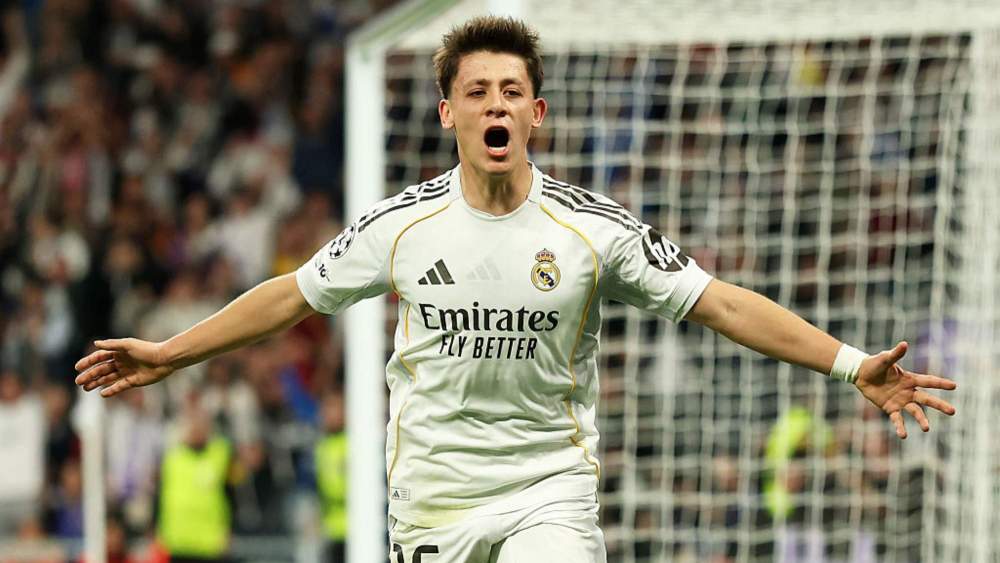
This season has already demonstrated how influential Güler can be when given responsibility. He recorded six goals and 14 assists in 51 appearances during the 2025/26 campaign, while becoming a much more regular presence in Madrid’s midfield.

The Modrić comparison is intriguing
Mourinho’s comparison with Luka Modrić is particularly interesting.
Modrić did not become the complete midfielder we remember overnight. His game evolved over the course of his career, with the Croatian gradually becoming more comfortable operating deeper and controlling matches from midfield.
Güler could potentially follow a similar trajectory.
He already possesses the technical qualities. His next challenge is developing the physical and defensive side of his game to match them.
If he succeeds, Real Madrid could eventually have a midfielder capable of creating chances, controlling possession, progressing the ball and influencing matches from deeper positions.
For now, however, Güler remains at the beginning of that transformation.
The question is no longer whether he has enough talent to play in central midfield. It is whether he can develop the defensive discipline, physical strength and tactical maturity required to make the No. 8 position his own.
Mourinho clearly believes the possibility exists.
And if Güler continues developing at his current rate, Real Madrid may eventually discover that their next great attacking midfielder was capable of becoming something even more valuable: a complete central midfielder.