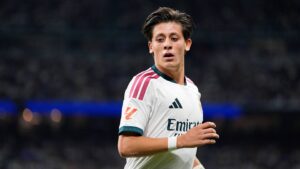
Mourinho’s Hidden Aces: The 3 Names Set to Save Real Madrid in Vinícius Jr.’s Absence
Vinícius Jr.’s suspension leaves Real Madrid at a crossroads with El Clásico looming — Mourinho’s three wild cards must deliver. 🚨 👀
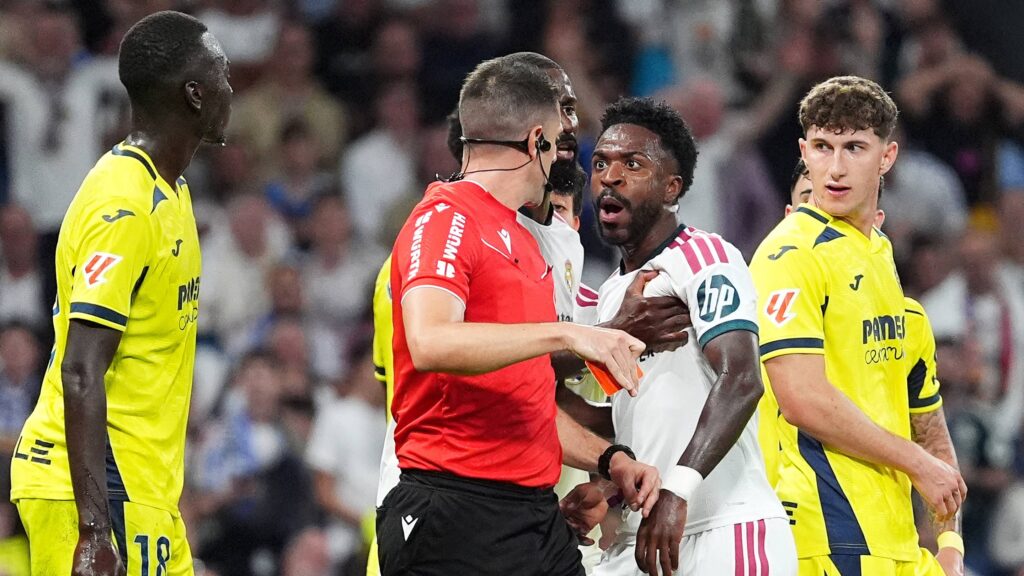
Vinícius Jr.’s absence tests Real Madrid’s depth like never before.
Vinícius Júnior’s red card against Villarreal has Real Madrid staring at a three-game ban for their star winger, a stretch that includes the Olimpico-like pressure of El Clásico. It’s a test of depth, identity, and the ability to preserve Madrid’s attacking pulse when the Brazilian’s pace, trickery, and goal-threat are temporarily removed from the equation. José Mourinho, renowned for extracting maximum value from a squad, now faces a decision matrix: who steps forward to shoulder the responsibility, and how does the system adapt to keep the front line frightening for Barcelona and the rest of La Liga?
Rodrygo Goes: The direct heir to the left wing throne
Rodrygo is the most obvious single-player answer, a talent who has grown into Madrid’s left channel with a natural weight of expectation on his young shoulders. His pace and close control allow him to threaten from the touchline and cut inside to unleash his συνεργάτες in dangerous zones. More importantly, he has developed an instinct for Madrid’s pressing rhythm—crucial when holding territory against high-pressing opponents on a big stage. In a 4-3-3 or a fluid 4-2-3-1, Rodrygo’s energy can maintain the balance between width and inside-running movement, ensuring the left flank remains a continuous outlet rather than a one-dimensional lane for the defense to squeeze.
Versatility and leadership: Asensio and Valverde shaping the plan
Marco Asensio represents an elegant, if measured, alternative. A winger by trade who can drift to the right or sit slightly higher in a three-man front line, Asensio brings proven finishing acumen and a calm, technical approach that can exploit compact defenses. His ability to time runs to meet low crosses or late-seeking through balls adds a different flavor to Madrid’s attack, especially when paired with a central pivot like Bellingham or Camavinga in midfield.
Federico Valverde adds another layer of flexibility. The Uruguayan is at his best when he plays with tempo, energy, and the willingness to invert. As an inverted winger or a wide midfielder, he can accelerate Madrid’s transitions, drag markers out of position, and still contribute defensively with his relentless work rate. If Mourinho opts for a slightly more aggressive, high-pressing shape, Valverde’s dynamism could be the x-factor that stretches Barcelona’s defense and creates space for others to exploit.
- Rodrygo — pacey dribbler who can anchor the left and open space for midfield pivots.
- Marco Asensio — versatile finisher who can operate on both wings and drift into central zones to create overloads.
- Federico Valverde — inverted winger profile with top-end energy to drive Madrid’s counters and press high.
The trio offers Mourinho a spectrum of tactical options: a direct, pace-heavy approach with Rodrygo; a technical, finishing-minded variant with Asensio; or a high-energy, transition-focused plan with Valverde. Each path preserves Madrid’s core strengths—fluid ball circulation, rapid counter-press, and the threat of late runs from midfielders—while compensating for the absence of Vinícius Jr. in a way that can keep El Clásico’s outcome within reach.
In the end, the choice might hinge less on a single name and more on the plan Mourinho intends to execute. Will Real Madrid lean into a direct left-flank assault, or will they pivot to a more varied, multi-front attack that keeps Barcelona guessing at every phase? The path to victory will reveal itself in the lineup, the movement, and the strategic patience Madrid bring to one of football’s biggest rivalries.