Did Real Madrid Just Write Valverde’s Midfield Farewell? A 5-1 Night Hiding a Tactical Reboot
Real Madrid’s 5-1 win over PSV signals a turning point for Valverde’s role and a potential tactical reboot for the midfield 👀🚨
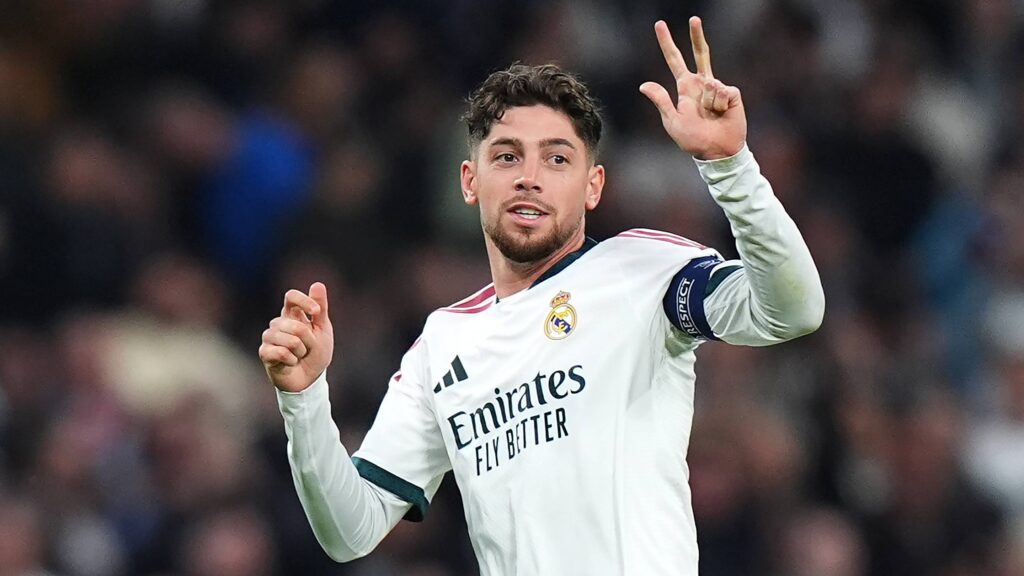
“Valverde’s future at Madrid may hinge on how this season unfolds.”
Real Madrid’s 5-1 thrashing of PSV Eindhoven in the Champions League group stage was more than a scoreline; it was a showcase of depth, tempo, and the subtle signals of a tactical evolution. While the flamethent of goals and standout moments grab headlines, the quiet storyline running through the night concerns Fede Valverde and whether his long-standing remit as a central midfielder is about to shift forever.
Valverde has long served as Madrid’s energy conduit—a box-to-box disruptor who arrives late in the box, recovers possession with ferocity, and fuels transitions with explosive bursts. Yet as Carlo Ancelotti tinkers with a midfield balance built on a more precise, possession-oriented spine, the question lingers: can Valverde sustain his all-action profile within a system that increasingly prizes deliberate build-up and positional discipline? The PSV result offered a live case study in Madrid’s current philosophy: when the team is at its best, it can suffer little from the absence of a traditional “nine-to-five” midfielder because the collective intensity covers ground with breath-taking efficiency.
The night’s headlines were dominated by finishing variety, from clinical forwards to late surges that overwhelmed PSV’s defence. But the underlying strategic takeaway is that Madrid now possess the flexibility to reinterpret roles without sacrificing intensity or output. For Valverde, that flexibility is both a blessing and a challenge: preserve the kinetic edge that makes him indispensable, while adapting to a matrix that could see him operating in wider areas or in a more advanced expressive role.
Valverde’s place in Madrid’s evolving midfield
Madrid’s midfield architecture is in a state of quiet reconfiguration. Tchouaméni remains the metronome, with others around him offering creativity, pressing energy, and dynamic runs. In this environment, Valverde’s best path forward may hinge on two questions: can he retain his exceptional pace and tenacity if deployed in a higher or wider position, and will the coaching staff embrace a system that asks him to contribute more as a goal threat than a traditional facilitator?
–
- Valverde’s future position: Real Madrid may transition him toward a wider or more advanced role to preserve his pace and pressing while rebalancing the midfield’s technical profile.
- Depth and rotation: The 5-1 win demonstrated Madrid’s breadth to sustain tactical experimentation without sacrificing tempo or output.
The 5-1 blueprint: a turning point for Madrid’s season
Beyond the particulars of Valverde, the victory underscores Madrid’s capacity to absorb players into multiple roles and still access elite-level performance. The match acted as a live audition for squad harmony, showing that a well-rounded depth chart can accommodate experimentation without compromising consistency. If Ancelotti can harness this versatility, Real Madrid will enter a pivotal stretch with options to rotate, to press more aggressively in phases, and to exploit space in both wide channels and central corridors.
As the season unfolds, the central question will be how the coach monetizes Valverde’s assets against a backdrop of emerging tactical ideas. If Valverde can adapt to a slightly altered remit—whether as a high-energy winger, a roaming playmaker, or a forward-pressing connector—the door to a longer-term future at Real Madrid remains ajar. For now, the 5-1 victory offers a blueprint: win with depth, win with flexibility, and win with a squad that can evolve as the season demands.