The Quiet Reunion That Could Rewrite Real Madrid’s Season: Nico Paz Returns and Mourinho-Style Tactics Loom
Real Madrid re-sign Nico Paz from Como, a move that could reshape the squad balance—and only a Mourinho-grade tactical pivot might untangle it. 🚨👀
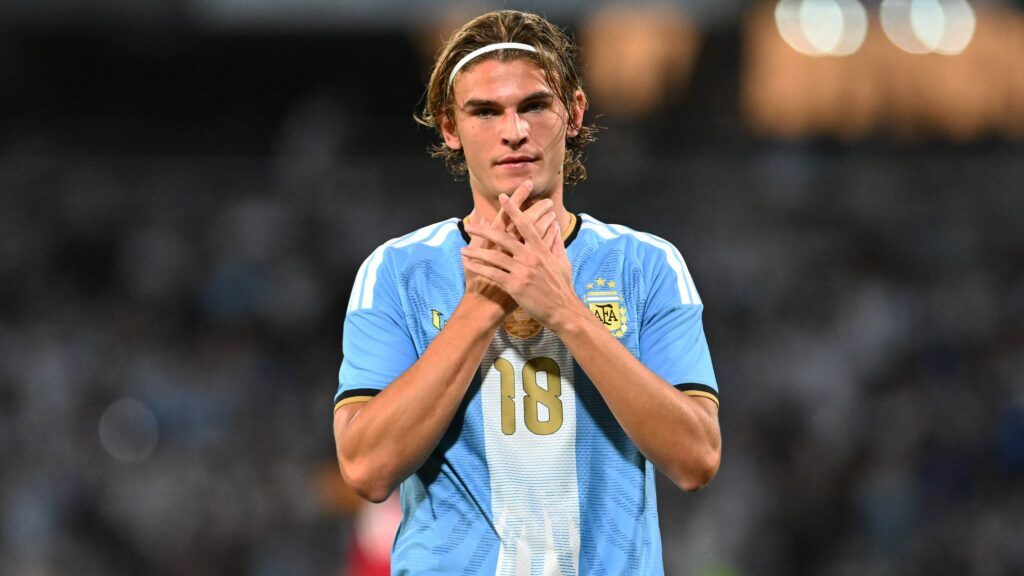
“Nico Paz’s return is not a signing; it’s Real Madrid casting a new balance into a delicate equation.”
Real Madrid have decided to re-sign Nico Paz from Como for next season, according to a report from Cope. The decision, described as done and dusted in Madrid circles, signals the club’s intent to reintegrate the Argentina youth international into the first-team setup after his productive spell away on loan. Paz’s profile—dynamic, technically adept, and capable of playing across several attacking and midfield roles—has the club weighing how best to fit him into a crowded framework at Valdebebas.
The development arrives at a critical juncture for Carlo Ancelotti and his staff. Madrid must balance youthful ambition with proven performance, all while contending with a forward line that is both talent-rich and positionally fluid. Paz’s versatility—able to map to a front three, press from the front, or operate as a roaming creator—could be a priceless asset, but it also creates a tactical headache that demands careful shaping.
- Return to Real Madrid signals a long-term plan to knit the next generation into the first team and reduce dependence on on-loan or aging options.
- Ambitious positional fit places Paz as a flexible attacker and potential creator across multiple roles, increasing both options and complexity for the coach.
- Squad balance risk could force minutes competition among established stars and rising talents, testing rotation policies and morale alike.
- Mourinho-style pivot hints at a pragmatic, system-driven approach to integrate Paz without disrupting the cohesion Madrid has built in recent seasons.
Contextualizing the Puzzle and the Possible Paths Forward
The reported decision lands against the backdrop of Real Madrid’s ongoing pursuit of balance between youth development and immediate competitiveness. Paz’s reintroduction would likely push a rethink of how Madrid structures its attacking lines—whether as a fluid front three that shifts through midfield corridors or as a more structured, hybrid role for Paz that sits between a traditional winger and an advanced midfielder. Either way, the move underlines Madrid’s intent to leverage domestic and European experience while cultivating a home-grown multiplier for the post-Celestine era.
From a tactical standpoint, several scenarios could emerge. Paz could slot in as a dynamic inside forward in a 4-3-3, press aggressively as a support striker, or operate as a creative conduit behind the central striker. The decisions will ripple through the squad’s rotation plans, potentially redefining who shoulders the creative burden in big matches and how to preserve balance against elite opponents in La Liga and the Champions League.
All Roads Lead to a Mourinho-Style Answer
The framing around Paz’s return—as a “tactical headache” that only a Mourinho-calibrated blueprint might resolve—speaks to a broader truth: Real Madrid must reconcile a generation of highly capable offensive talent with a coherent system that maximizes their collective impact. While Ancelotti has built a flexible, player-driven approach, Paz’s reintegration could necessitate a more defined, Mourinho-esque pragmatism: sharper roles, tighter positional discipline, and a willingness to tailor the system around a standout young creator without sacrificing defensive solidity.
In practice, that could mean a more structured high-press regime, recalibrated pressing triggers, and a rotation plan designed to keep Paz sharp while ensuring the established strike force maintains its balance. The net effect would be a Real Madrid that blends homegrown promise with tactical edge, guided by a blueprint that emphasizes balance, discipline, and ruthlessly effective alignment in the most challenging fixtures.
As Cope’s report filters through Madrid’s corridors and into the fanbase’s imagination, one thing is clear: Nico Paz’s return is about more than a loaned talent coming home. It is a deliberate recalibration—one that could redefine Real Madrid’s attacking architecture and the strategic calculus of the club’s most consequential seasons. Whether the final arrangement resembles a traditional model or a new, Mourinho-inspired variant remains to be seen, but the stakes are unmistakably high.