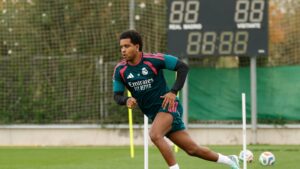
The Right-Back Enigma: Valverde’s Hidden Sacrifice That Could Decide Real Madrid’s Next Chapter
Valverde swaps his comfort zone for the defensive frontline, a bold move Madrid hope will unlock their season—but the payoff remains in suspense 🚨👀
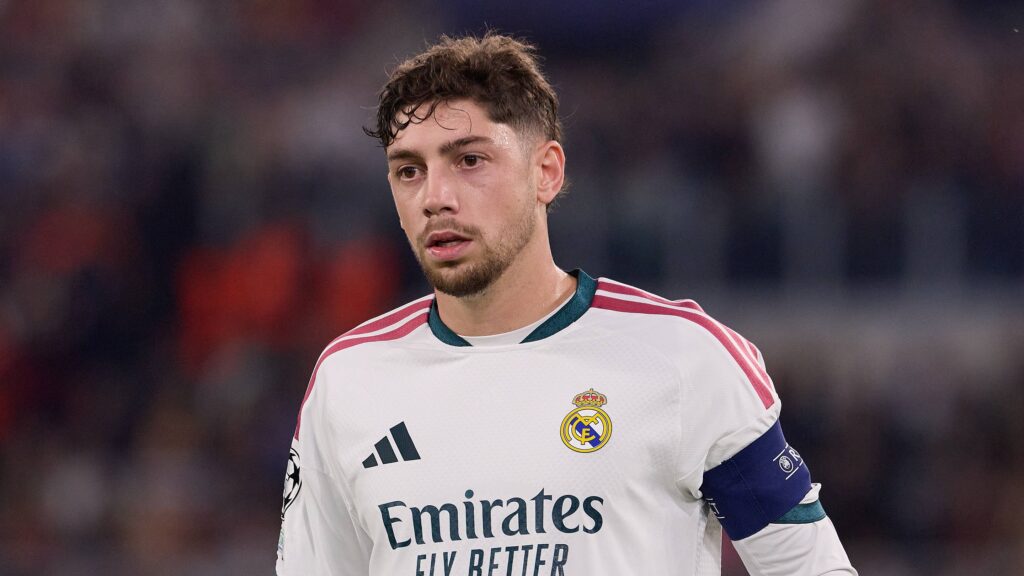
“Sacrifice is part of Real Madrid’s DNA.”
Valverde’s Right-Back Sacrifice: The Tactical Calculus
With Real Madrid navigating a period of rotation and fixture congestion, Fede Valverde has found himself stepping into a role far from his natural position: right-back. The move is not merely a stopgap; it is a calculated case of system over comfort, a testament to Madrid’s willingness to reshape the canvas in pursuit of a greater whole. Valverde’s profile—explosive pace, relentless stamina, and pristine ball-carrying ability—fits an evolving blueprint that prizes width, high pressing, and compact defensive organization even when traditional full-backs are unavailable or out of form. The experiment asks one critical question: can a midfielder-turned-wing-back sustain Madrid’s intensity on both ends of the pitch for 90 minutes, week after week?
The answer, for now, rests on how seamlessly Valverde can merge two worlds—the instinctive chaos of an off-ball runner and the disciplined discipline of a defender. When he tucks inside to shield the backline, Madrid’s shape remains tight, and his lateral speed covers ground in a way few can mimic. Off the ball, his relentless pressure up the flank keeps opponents honest, enabling the middle of the park to stay compact and efficient. It’s a high-wire act, but one that speaks to the club’s broader philosophy: adapt, endure, and thrive through versatility.
Why This Move Fits Madrid Now
Real Madrid have long built their success on a blend of technical quality, match intelligence, and a willingness to adapt on the fly. Valverde’s sacrifice—whether born from necessity, tactical intuition, or a bit of both—embodies that ethos. The right-back berth, held by a player who is more accustomed to threading passes through midfield lanes, becomes a crucible in which Madrid tests the limits of positional flexibility. If the plan pays off, the benefits extend well beyond a single game.
– Valverde’s rare versatility allows Real Madrid to keep their high-pressing, compact shape even with injuries or rotation, avoiding a drop in intensity.
– Impact on the midfield—dropping into right-back can free teammates to push higher and keep ball progression sharp through the central midfield trio.
– Defensive discipline—with Valverde pinging back and forth along the line, Madrid can maintain structure during transitions and survive quick counters more deftly.
– Long-term implications—the experiment could forge a more fluid, adaptable full-back system for future campaigns, reducing overreliance on conventional wing-backs.
The Road Ahead: Opportunity or Obstacle?
If Valverde’s right-back stint becomes a durable fixture, Real Madrid could emerge with a more dynamic, position-fluid approach that leverages hybrid roles to outpace opponents who have grown weary of static formations. Yet the path is not devoid of risk. Maintaining defensive cohesion while pushing high up the field demands exceptional timing, communication, and endurance. A misstep could expose the backline in vulnerable moments, especially against teams with quick wingers and disciplined counter-attacks.
Still, the broader narrative is clear: Madrid’s squad strategy is anchored in pragmatism, leadership, and the willingness to redefine roles for the sake of collective success. Valverde’s sacrifice is not a demotion; it is an investment in a flexible system where every player can adapt to the game’s demands. If the balance is struck, Real Madrid may unlock a more resilient and fluid identity—one that can bend without breaking when the season presses in.
– Valverde’s move is a reflection of Madrid’s DNA: relentless adaptability in pursuit of glory.
– The success of this tactic will hinge on sustained defensive discipline and midfield cohesion to keep the team’s balance intact.