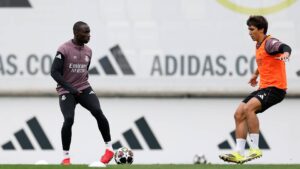
Real Madrid Thought This Galactico Move Was Done… Then Barcelona Changed Everything
Madridistas were already imagining the perfect new era — until one brutal twist reportedly shut the door on a dream signing 👀💣
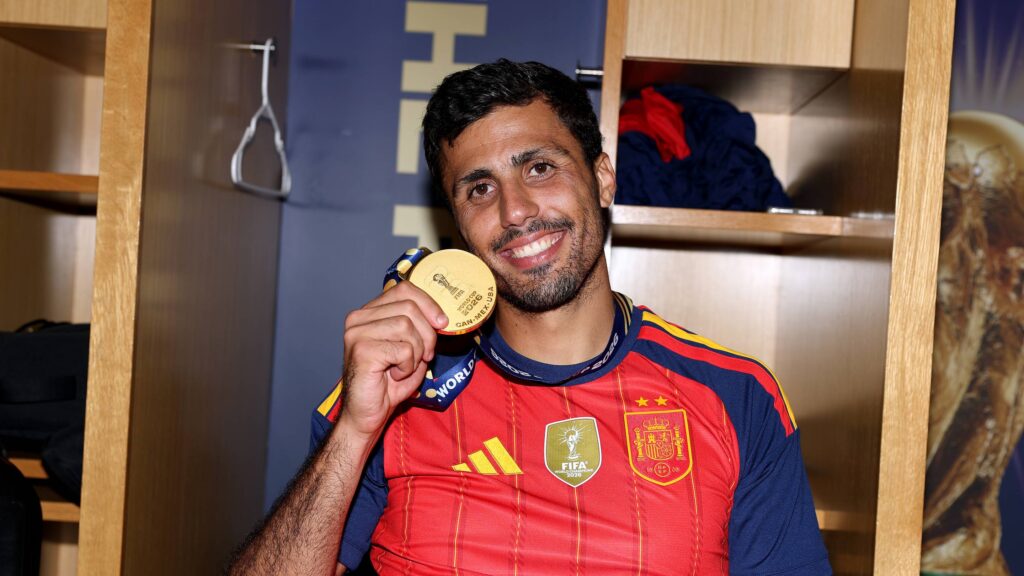
What looked like the missing piece in Real Madrid’s next great side has suddenly slipped out of reach.
Real Madrid supporters had started to view the possible arrival of Rodri as more than just transfer gossip. For many, it felt like the natural final step in building a complete, dominant XI for the new era at the Santiago Bernabéu. A world-class holding midfielder, a Ballon d’Or-level presence in the middle, and a player with the intelligence to give structure to a star-studded attack — on paper, it made almost too much sense.
Yet the reality inside Valdebebas appears to have been far more cautious.
Despite growing excitement among fans, Florentino Pérez was never fully convinced by the operation from the outset. The Real Madrid president reportedly had reservations over the scale of the deal, the financial implications, and whether such a massive investment aligned with the club’s wider long-term strategy. Even if there was some softening internally, the move was never as advanced or as inevitable as many outside the club had assumed.
And then came the factor that changed everything: Barcelona.
A dream midfield solution that now looks out of reach
Rodri represented the kind of profile Real Madrid have lacked in certain high-pressure moments — a midfielder capable of dictating rhythm, protecting the back line, and bringing calm to chaos. In a squad loaded with technical brilliance, athleticism, and attacking flair, his presence would have added elite positional discipline and control.
There is a reason so many Madridistas became fixated on the idea. In a projected side built around Jude Bellingham, Federico Valverde, Vinícius Jr., Kylian Mbappé, and the club’s next generation of stars, Rodri looked like the perfect balancing piece.
- Elite control: Rodri offers tactical intelligence and composure at the very highest level.
- Big-game authority: He is the type of midfielder who can dominate Champions League nights without needing headlines.
- Perfect fit: His profile would have complemented Madrid’s explosive attackers and dynamic interiors.
But however ideal the fit may have seemed, elite transfers are not won on tactical boards alone. They are shaped by timing, finances, politics, and market conditions. And in this case, the broader landscape appears to have worked against Madrid.
Barcelona’s role has effectively helped collapse the possibility of the transfer, removing momentum from an already delicate situation and ensuring that the operation is no longer viewed as realistic. For Real Madrid, that means any plans built around Rodri must now be abandoned.
What this means for Madrid’s strongest possible XI
With Rodri no longer a viable option, the conversation shifts from fantasy to adaptation. The good news for Real Madrid is that the squad remains one of the most talent-rich in Europe. The challenge now is not replacing Rodri directly in theory, but finding the best internal structure without him.
That likely means doubling down on the qualities already available in the squad: energy, verticality, technical quality, and positional flexibility. It also means trusting the development of existing midfield pieces rather than searching for a single superstar solution.
A strongest possible Real Madrid XI after the collapse of the Rodri dream could now revolve around a more fluid balance:
- Goalkeeper: Thibaut Courtois remains the undisputed reference between the posts.
- Defence: Dani Carvajal, Éder Militão, Antonio Rüdiger, and Ferland Mendy provide power, experience, and defensive bite.
- Midfield: Jude Bellingham, Federico Valverde, and Aurélien Tchouaméni now become even more central to the team’s identity.
- Attack: Vinícius Jr., Kylian Mbappé, and Rodrygo offer devastating pace, unpredictability, and elite-level finishing.
In that setup, Tchouaméni’s role becomes particularly significant. If Madrid cannot sign the proven controller many envisioned, then the Frenchman must continue growing into that responsibility. Around him, Bellingham and Valverde provide the intensity and dynamism to overpower opponents physically and technically.
No Rodri — but no shortage of ambition
There is, of course, a symbolic disappointment in this outcome. Rodri was not just another name on a transfer shortlist. He represented certainty. He represented control. He represented the feeling that Real Madrid could build a side with almost no weakness.
But this is also the reality of modern elite football. Even Real Madrid cannot simply complete every operation they desire, especially when market conditions turn hostile and rival forces reshape the landscape.
What matters now is how the club responds. Madrid still possess a terrifying foundation, still have world-class stars across the pitch, and still remain one of the favourites for every major title. The collapse of the Rodri dream may sting, but it does not derail the project.
If anything, it sharpens the next question: can this current midfield evolve into the complete unit Madrid need, or will the absence of that one missing piece be felt when the biggest nights arrive?
That is the mystery now hanging over the Bernabéu.